
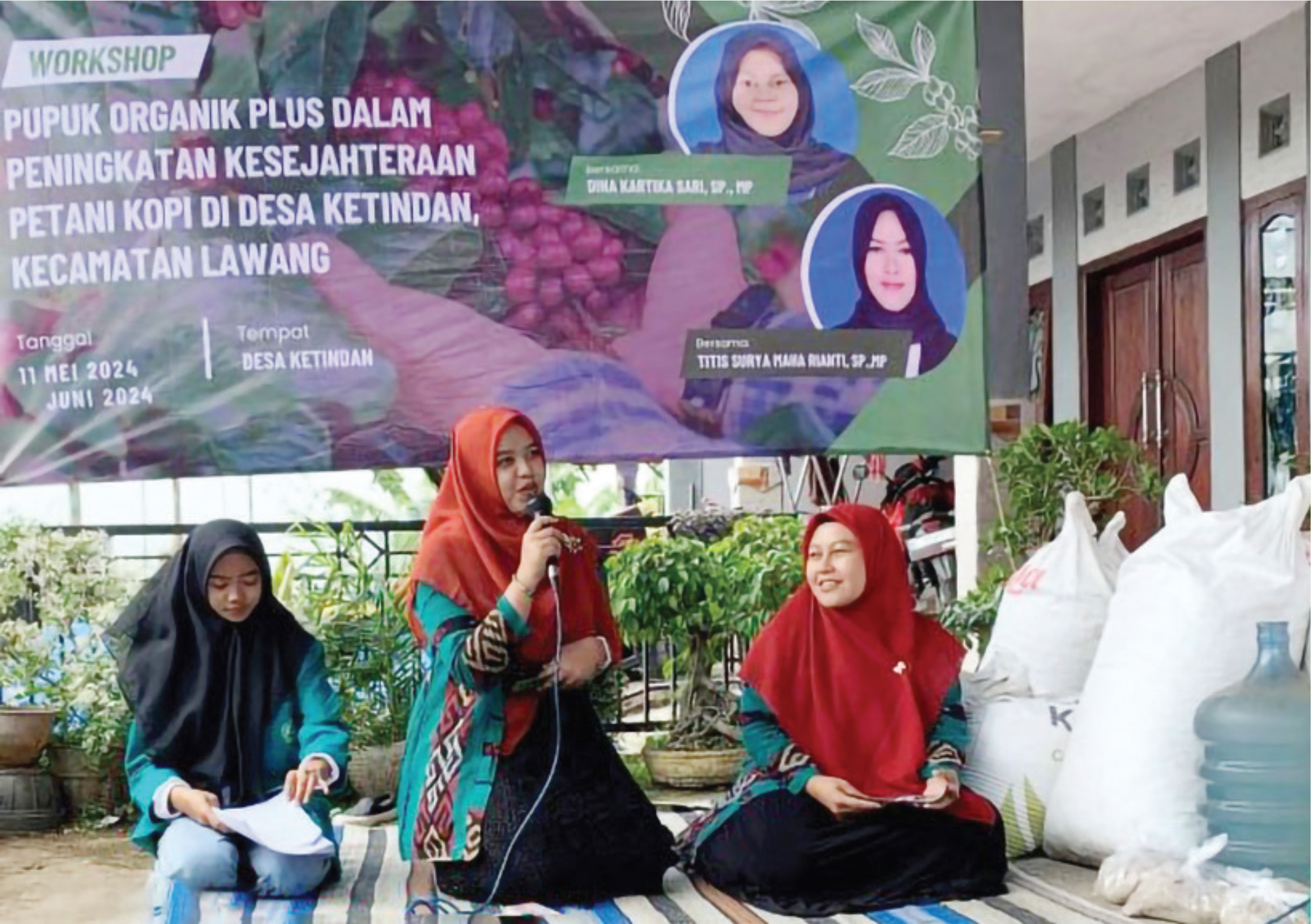
Lecturers from Agribusiness Department, Faculty of Agriculture UNISMA have been actively involved in initiatives that improve food security
and farmer welfare through sustainable practices. One key program was the training for coffee farmers in Ketindan–Lawang, where lecturers introduced organic fertilizer plus, a formulation designed to improve soil fertility and crop yields while reducing dependence on chemical inputs. This approach not only lowers production costs but also contributes to environmentally friendly farming systems.
In addition, lecturers conducted research on the dynamics of chili demand, a critical commodity for both local consumption and smallholder farmer income. The findings helped farmers anticipate market fluctuations, improve harvest planning, and stabilize their income. By combining training, technology transfer, and applied research, UNISMA strengthens the resilience of farming communities and supports the long-term sustainability of food production systems. These efforts show how higher education institutions can directly contribute to SDG 2 by addressing challenges faced by smallscale farmers.